

Camera movements are fundamental tools in photography and audiovisual production to create impactful effects and convey emotions. Among the most common movements are tilt up and down, panning, and travelling.
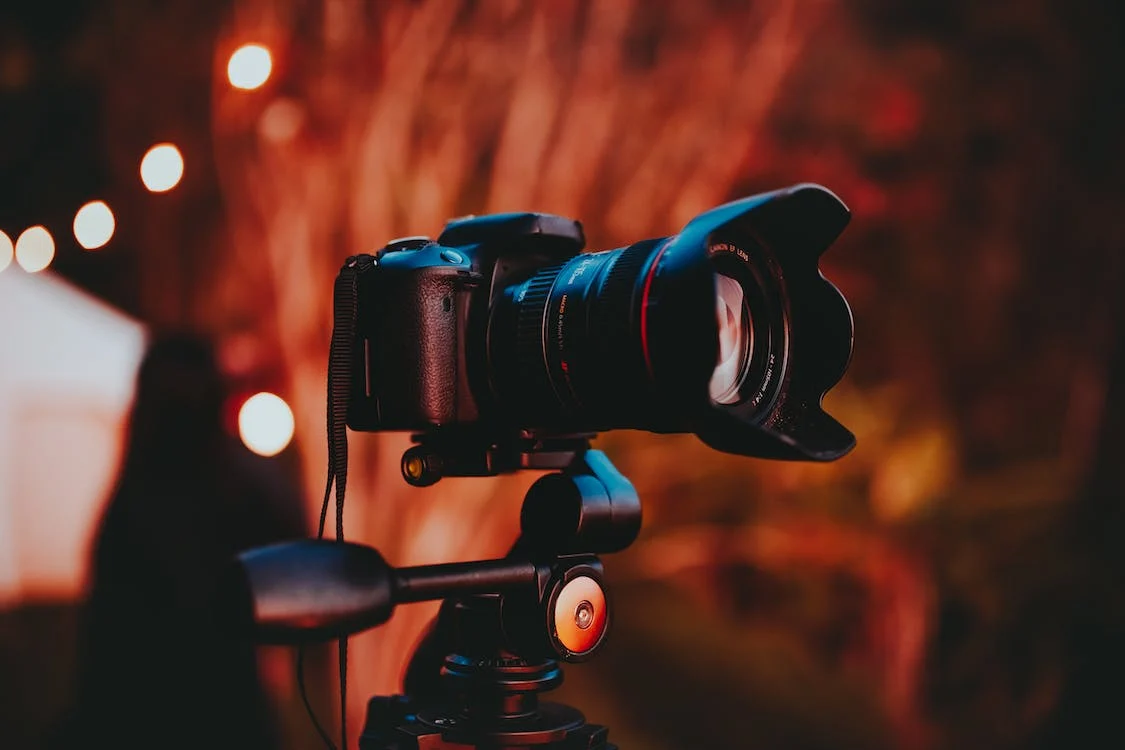
Tilt up and down involves moving the camera upward or downward on a vertical axis. This movement is ideal for highlighting vertical elements, revealing changes in perspective, or conveying a sense of grandeur or intimacy. To achieve smooth and precise tilts, a tripod that allows for adjusting the camera’s tilt is required.
On the other hand, panning involves horizontally rotating the camera on a vertical axis. This movement is useful for tracking a moving subject, exploring a landscape, or creating a sense of continuity. A tripod with a smooth panning head is essential for achieving seamless and jerk-free transitions.
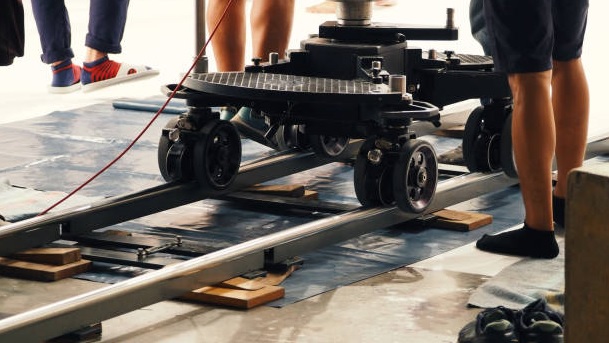
Travelling, also known as dolly, involves moving the camera in a straight line forward or backward. This movement can add dynamism to the shot, track a moving subject, or reveal new elements in the scene. It can be achieved using a tripod with wheels, a dolly, or even a crane for wider and smoother movements.
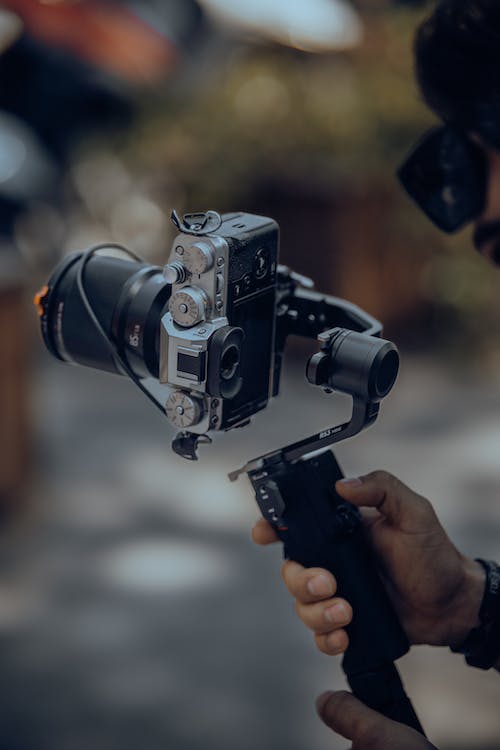
For those who want to capture dynamic and fluid images without compromising stability, camera stabilizers have become an invaluable tool. Devices like handheld stabilizers or gimbals have revolutionized the way handheld camera movements can be achieved with professional results.
Camera stabilizers are designed to counteract unwanted movements, shakes, and vibrations that occur when holding the camera by hand. They use a combination of suspension technology and gyroscopes to ensure that the camera remains in a stable position and reduce undesired movements. This allows for smooth and steady shots, even when walking, running, or making abrupt movements.
Indeed, camera movements enable us to achieve shots that enrich our visual storytelling, create visual interest, and convey specific moods and emotions. Don’t hesitate to explore the full range of movements that your camera allows you!


